
𝐀𝐏𝐏𝐄𝐀𝐑𝐈𝐍𝐆 𝐓𝐎 𝐇𝐀𝐕𝐄 𝐂𝐀𝐏𝐀𝐂𝐈𝐓𝐘 𝐈𝐒 𝐍𝐎𝐓 𝐓𝐇𝐄 𝐒𝐀𝐌𝐄 𝐀𝐒 𝐇𝐀𝐕𝐈𝐍𝐆 𝐂𝐀𝐏𝐀𝐂𝐈𝐓𝐘
Whilst a cognitive impairment is not a crime(in guardianship, it seems like many are treated in just that way!), those with a diagnosis of mild cognitive impairment should not automatically be placed under any guardianship and administration orders, particularly if the individual is not at personal or financial risk.
We have met numerous people who have had a stable mild cognitive impairment for several years, never progressing further than a mild diagnosis.
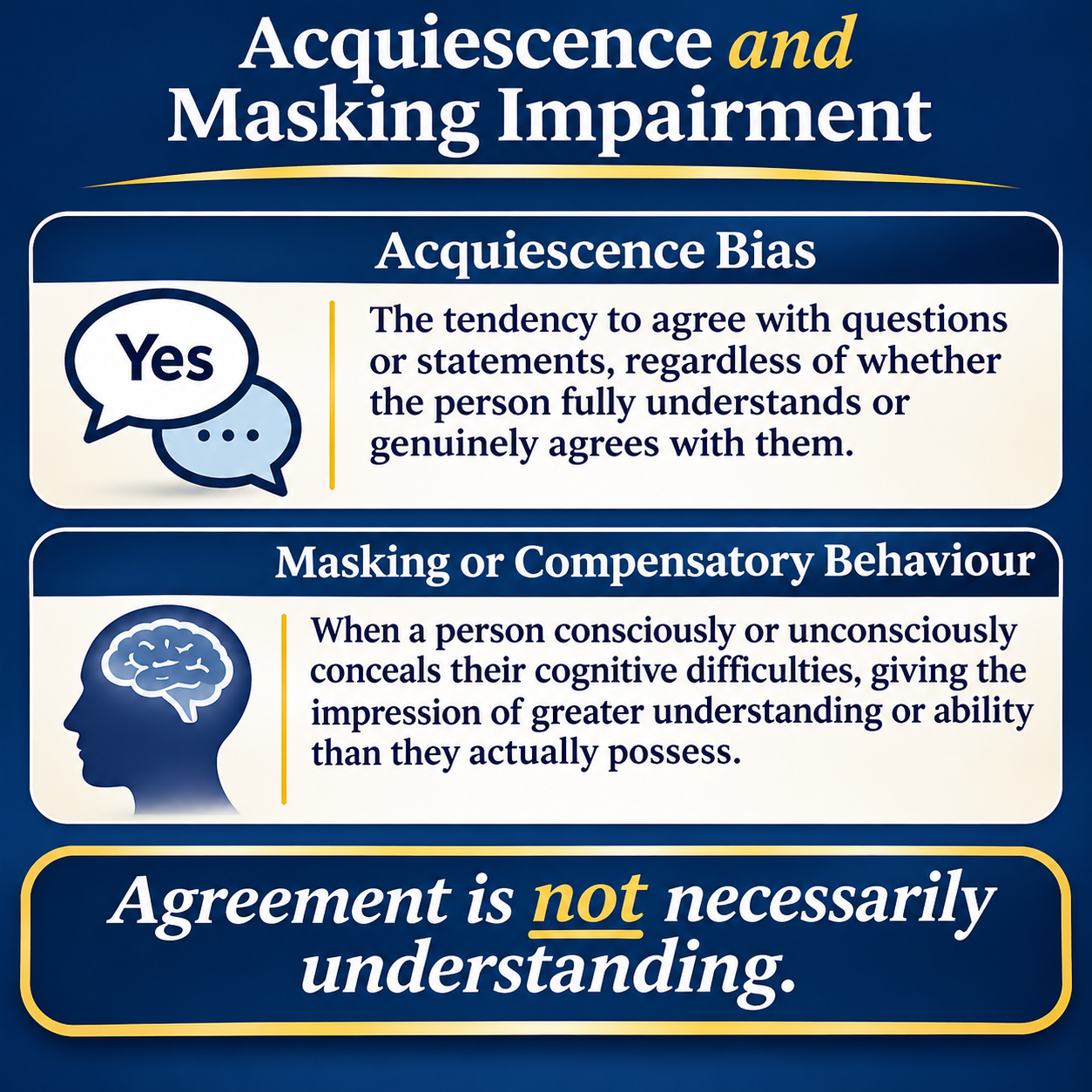
Conversely, we have met people whose executive function is severely affected but who can still present as very competent!
Individuals with executive impairment can often display strong communication skills, have good memory and can be fully physically independent. They can carry out daily living tasks unaided, but can suffer from;
Exercising sound judgement.
Recognising manipulation and exploitation.
Understanding the consequences of complex decisions.
Assessing financial risks.
Distinguishing reality from delusional or paranoid beliefs.
Engaging in higher-level decision-making.
Whilst an apparently competent person can still suffer greatly from cognitive impairment, they are especially susceptible to financial abuse (This needs to be substantiated with actual evidence).
If more supportive decision-making and/or other less controlling methods of support fail to provide adequate protection, a restricted control order can offer financial protection without necessarily affecting other essential rights.
To the greatest extent possible, people should continue to be allowed to:
Reside in their preferred home.
Continue to interact with family and friends.
Select their own care/service providers
Take part in their local community.
Make decisions relating to their life
(People are often assessed 'on paper' and assessments are not made in the person's environment, which is the true assessment process. In many cases we have seen, hospitals make statements that the person is at risk without any evidence to substantiate their claims!!!)
Capacity does not exist on a binary scale. Someone may have no capacity to manage finances but still have capacity for personal and lifestyle choices.
Each case must be assessed individually as someone can be non - competent in some fields but still competent in others.
Support structures should never be implemented in a way that unduly infringes on a person’s liberty, self-respect and basic human rights.
It is essential that suitable protection is put in place for those who are susceptible to abuse, however, that as much freedom and independence is also maintained wherever possible. This is a hard balance, unfortunately, especially when dealing with a lack of insight.
AASGAA – Australian Association to STOP Guardianship and Administration Abuse
See less